How Transport Infrastructure Drives Economic Growth in Namibia
25 February 2026
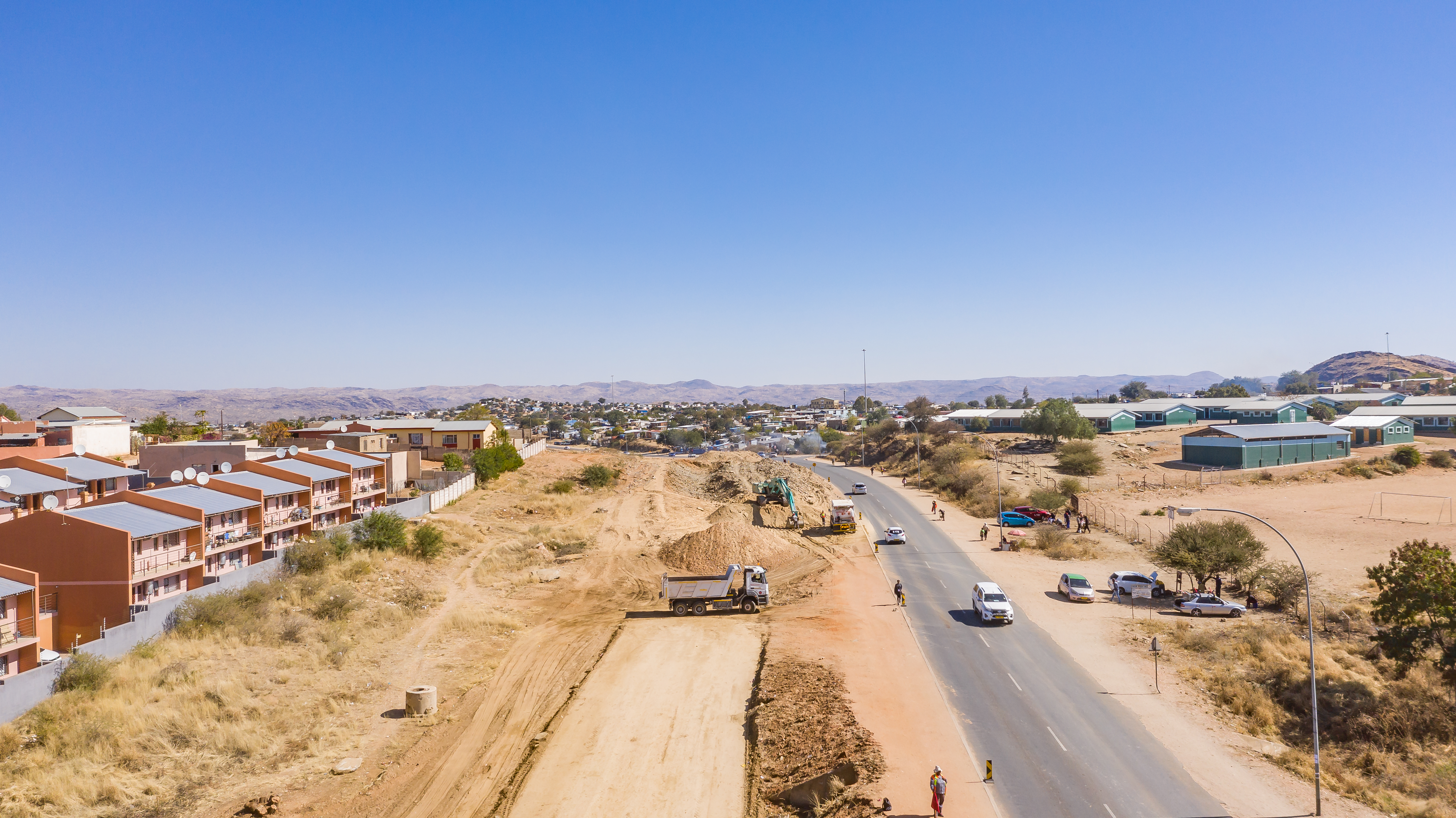
Transport infrastructure is more than a means of movement. In practice, it determines whether goods arrive on time, whether projects remain viable, and whether economic activity can scale beyond local markets. In Namibia, where long distances and dispersed economic activity are structural realities, transport systems play a decisive role in national growth.
Roads, railways, ports, and industrial corridors do not simply connect places. They determine what is economically possible.
Roads: The Capillary System
Namibia’s road network is one of its most significant public assets. Paved national routes connect major centres, but the condition of gravel and district roads determines whether rural communities can access markets, health services, and economic opportunity.
Road infrastructure investment has a well-documented multiplier effect. Each kilometre of maintained road reduces transport costs, increases agricultural productivity, and expands the catchment area for service delivery. For Namibia’s dispersed population, the road network is foundational infrastructure, not optional.
Rail: Unlocking Bulk Commodity Movement
Rail infrastructure is particularly significant for Namibia’s mining and agricultural sectors, where bulk commodity movement over long distances makes road haulage uneconomic. The TransNamib network, though constrained by historical underinvestment, represents a strategic asset for connecting inland production centres to coastal ports.
Investment in rail, track rehabilitation, signalling upgrades, rolling stock renewal, creates multiplier effects across the logistics, mining, and agricultural supply chains. For landlocked countries in the region using Namibia’s rail corridors, it also positions Namibia as a regional logistics hub.
Ports: The Gateway to Regional Trade
The Port of Walvis Bay is Namibia’s primary trade gateway and one of Southern Africa’s most strategically located deep-water ports. Its expansion, including the new container terminal, significantly increases Namibia’s capacity to handle regional trade flows and positions the country as a key node in the Walvis Bay-Ndola-Lubumbashi Development Corridor.
Port capacity directly affects export competitiveness. Delays at port translate into higher logistics costs across the entire value chain, affecting the viability of export-oriented industries.
Industrial Corridors: Connecting Productive Activity
Industrial development corridors integrate transport infrastructure with productive economic activity. By linking ports, processing zones, and resource extraction areas, corridors reduce the cost of moving goods through the production and export chain.
The development of Namibia’s corridor infrastructure, particularly the Trans-Kalahari and Trans-Caprivi corridors, creates the conditions for industrial and agricultural activity that would otherwise be unviable. For AIM, infrastructure engineering in corridor contexts means understanding not just the technical requirements of the road or bridge, but the economic logic of the system it enables.
AIM’s Role
AIM has delivered infrastructure across Namibia’s transport network, from road upgrading and decongestion works in Windhoek to consultancy on major development projects. Our approach is grounded in understanding the economic function of the infrastructure we design, not just its technical specifications. Infrastructure built to last must be built with purpose.